How to Launch ChatGPT Ads That Drive Direct Bookings for Boutique Hotels
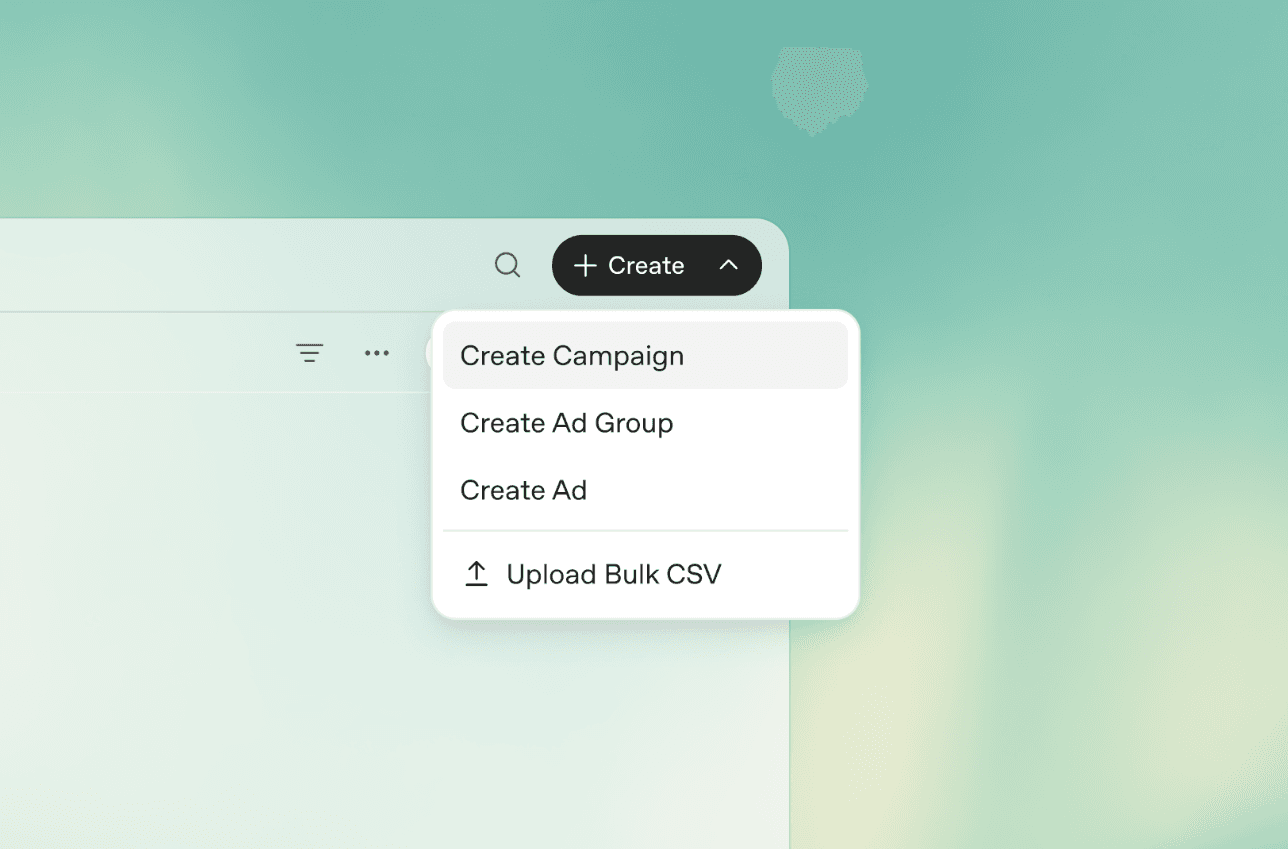
A traveler opens ChatGPT and types: “Best boutique hotels in Savannah with a courtyard and free breakfast.” Seconds later, they have a short list of named properties instead of a page of links to Booking.com. Below that answer, ChatGPT can now show a sponsored card from a hotel that wants to be part of the decision.
That’s the opportunity behind ChatGPT Ads for boutique hotels. The traveler is already in planning mode and narrowing a shortlist. Your property either shows up in that conversation or it doesn’t.
OpenAI’s self-serve Ads Manager is still in beta, and the platform changes month to month. Zanobe runs ChatGPT Ads for hotel clients, and this guide covers how the platform works, how to reach the right travelers, which creative specs you need, how to tie spend to direct booking revenue, and how to structure a four-week pilot you can launch this quarter.
Why Should Boutique Hotels Pay Attention to ChatGPT Ads Now?
AI is already part of how Americans plan trips. 56% of U.S. leisure travelers used AI for planning, booking, or in-destination help on at least one trip in the past 12 months, up from 43% in the second half of 2025 (Phocuswright, Mar 2026). The same research found that 33% of travelers now use generative AI platforms like ChatGPT for trip research, close to the 35% who use search engines (Phocuswright, Mar 2026).
A traveler who asks ChatGPT to compare boutique hotels in one neighborhood by vibe and budget has usually done more thinking than someone typing “hotels in Austin” into a search bar. They want a recommendation, and they are close to a decision.
Here is where the money is. When that traveler books through an OTA, the hotel typically pays 15-25% in commission (industry standard range). A ChatGPT ad can send the same traveler straight to your booking engine. If they complete the reservation there, the commission stays with the property.
Two things have to be true for that to work. The ad must point to a direct booking flow, and your tracking must confirm the guest finished booking there instead of drifting back to an OTA.
How Do ChatGPT Ads Work?
ChatGPT Ads appear as clearly labeled sponsored cards below ChatGPT’s answer. They sit outside the response text, and OpenAI states that ads do not influence what ChatGPT says (OpenAI, Aug 2026). Each card includes your brand name, logo, a title, short copy, an image, and a link to your landing page (OpenAI Help Center, 2026).
Because the card shows up after the traveler has already received help, it reads as a possible next step in the conversation. That shapes how you should write the copy, which we cover below.
Ads may appear for users on the Free and Go plans. Plus, Pro, Business, Enterprise, and Edu accounts do not see ads, and OpenAI does not show ads to accounts it identifies as belonging to users under 18 (OpenAI Help Center, 2026). OpenAI hasn’t published a demographic breakdown of this audience, so your first campaigns are also how you learn who responds.
Which Bidding Model Should a Hotel Start With?
Ads Manager offers three ways to buy:
CPM (reach): You pay per 1,000 impressions. The launch default maximum bid was $60, and reported clearing rates have since settled closer to $25-45 (Topify, Jul 2026).
CPC (clicks): You pay per click. OpenAI recommends a starting maximum bid of $3-5 (OpenAI Help Center, 2026).
Conversions (oCPC): The system optimizes toward a conversion event you choose, such as a confirmed booking, but you’re still billed per click. OpenAI has also added an impression-billed version, oCPM (OpenAI Help Center, 2026).
For a hotel pilot focused on direct bookings, CPC is the cleanest place to start. You pay for traffic, you track what that traffic does on your booking engine, and the math stays transparent. Once your tracking has enough data, a Conversions campaign is the natural next test. Existing CPM or CPC campaigns cannot be switched to oCPC, so plan on building a new campaign for it (OpenAI Help Center, 2026).
How Do You Target the Right Travelers With ChatGPT Ads?
Targeting starts with context. OpenAI matches your ad to the topic and intent of the conversation, using your creative, your landing page, and the context hints you write at the ad-group level. Context hints are short descriptions of when your ad is relevant. They guide matching, but they are not exact-match keywords (OpenAI Developers, 2026).
For a coastal boutique hotel, a useful hint might read: “traveler researching boutique hotels in coastal destinations for a romantic weekend.” The more specific the hint, the more clearly it describes a real guest with a real reason to book.
Location targeting goes well beyond country. Where available, you can target states or regions, cities, markets, and postal codes, though options vary by country (OpenAI Help Center, 2026). For a destination property, that means putting spend into your feeder markets. A Napa Valley boutique hotel would likely target San Francisco, Los Angeles, and Seattle instead of the whole country.
A practical ad-group structure for ChatGPT Ads for boutique hotels splits travelers by how far along they are:
Inspiration: Travelers in early planning who haven’t picked a destination yet.
Destination: Travelers who have chosen your region and are comparing places to stay.
Amenity: Travelers filtering by specific features, such as “hotels with a rooftop pool” or “no resort fee.”
Give each group its own context hints and creative written for that stage of the decision.
Can You Use Your Own Guest Data for Targeting?
Yes, with limits. Custom audiences are built from customer or prospect lists of email addresses or phone numbers (OpenAI Help Center, 2026; PPC Land, 2026). You can include or exclude them at the campaign level, or use them as bid adjustments inside an ad group.
The catch for smaller properties: inclusion audiences and bid adjustments need at least 25,000 matched users (OpenAI Help Center, 2026). Most boutique hotels won’t reach that with a past-guest list. Exclusions can use smaller lists, so the most practical first move is excluding guests who have already booked an upcoming stay.
Ads Manager doesn’t currently offer demographic or interest targeting, so the conversation does most of the work. You reach travelers based on what they are asking about right now.
What Creative Specs and Messaging Work Best in ChatGPT Ads?
The requirements are tight by design (OpenAI Help Center, 2026):
Title: Up to 50 characters, with 16-24 recommended.
Copy: Up to 100 characters, with 32-48 recommended.
Image: Square PNG or JPG, no larger than 1200 x 1200 pixels.
We recommend real photography of the property over text-heavy graphics. At that size, the image has to communicate the feel of the stay at a glance.
What Should the Copy and Landing Page Do?
Match the tone of the conversation. ChatGPT’s answers are advisory and helpful, so an ad below them with loud promotional language feels out of place. The hotel ads that fit best continue the recommendation. Lines like “Book direct for our best rate” or “Reserve without OTA fees” speak to a traveler who is comparing options and looking for a reason to choose.
Skip generic luxury words like “world-class,” “unparalleled,” and “exceptional.” They use up characters without telling the traveler anything. A concrete detail such as “Cliffside suite, free cancellation, no resort fee” gives them a real reason to click.
The landing page must be valid, reachable, and not blocked by OpenAI’s crawlers (OpenAI Help Center, 2026). Send the click to a direct booking page with live rates, not your homepage. Every extra click between the ad and checkout is another chance to lose the guest.
How Do You Measure Direct Bookings From ChatGPT Ads?
OpenAI offers three ways to report conversions: a browser-based Measurement Pixel, a server-side Conversions API, or both together with a shared event ID so the same booking is not counted twice (OpenAI Developers, 2026).
For hotels, server-side tracking is the safer choice. Confirmations happen after payment processing, and a browser session can drop before a pixel fires on the confirmation page. The Conversions API records the event on the server, so a dropped session doesn’t erase the booking from your data.
Two standard events map neatly to the booking flow: checkout_started for a booking in progress and order_created for a confirmed booking. Pass the booking value with order_created so your reports connect ad spend to room revenue, not clicks. If your booking flow runs through a mobile app, AppsFlyer and Adjust are the currently supported measurement partners (OpenAI Help Center, 2026).
How Do You Calculate ROI Against OTA Commissions?
The ROI case for ChatGPT Ads for boutique hotels comes down to one comparison: what a direct booking costs you versus the commission you would have paid on the same stay. Here is an illustrative example using assumed numbers.
A guest books a $300 stay through Booking.com at an 18% commission, so the OTA takes $54. If your ChatGPT Ads campaign brings that same guest to your booking engine at a cost of $12 per confirmed booking, the property keeps $42 it would otherwise have paid out.
The $12 figure is an assumption. Your actual cost per booking will depend on your CPC and conversion rate. The test itself stays the same: if your cost per direct booking is lower than the OTA commission on the same stay, the channel is paying for itself.
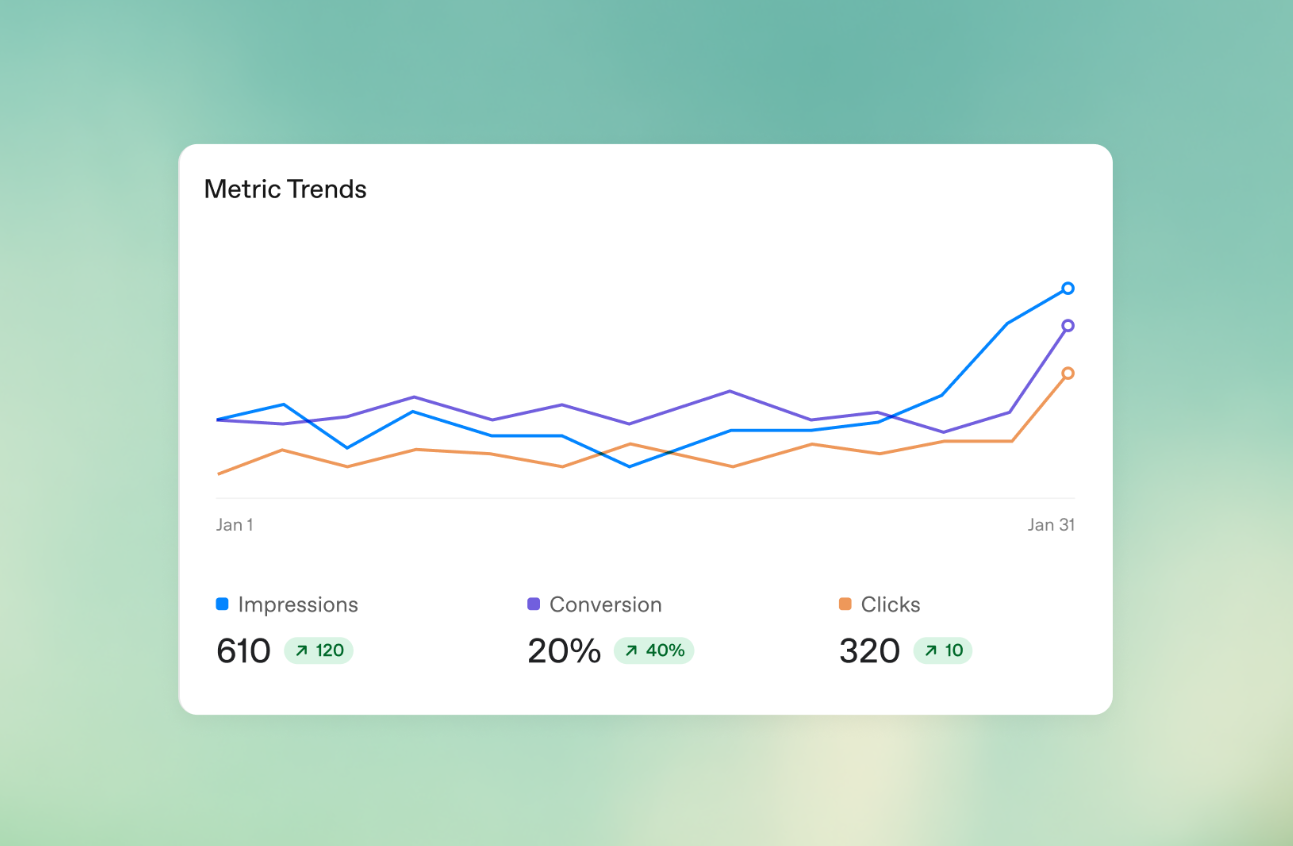
Zanobe’s client dashboards track this in real time: spend, cost per confirmed booking, booking revenue, and estimated commission saved on bookings that would otherwise have gone through an OTA.
What Does a Four-Week ChatGPT Ads Pilot Look Like?
This structure is built to produce real data without committing too much budget before your targeting and creative are proven.
Week 1: Create your account at ads.openai.com, complete verification through Persona, and set up billing (OpenAI Help Center, 2026). Verification and account review are separate steps, so allow a few days before launch. Install the Conversions API before you spend anything. Then launch one campaign with two ad groups, one for broad travel intent and one for your destination, each with its own context hints, title, copy, and image.
Week 2: Let the campaign run. OpenAI advises giving new campaigns enough time to gather meaningful performance data before making changes (OpenAI Help Center, 2026). Use this week to confirm that checkout_started and order_created are firing correctly on real bookings.
Week 3: Review click-through rate by ad group. Pause context hints that get no clicks or cost too much per click. Test one creative change per ad group, either the title or the image, so you know which change moved performance.
Week 4: Review cost per confirmed direct booking and calculate the commission saved. Then decide whether to scale, refine targeting, or rework the creative. If your cost per direct booking is below the OTA commission on the same booking value, the channel is profitable and the case for more budget is clear.
For budget, we suggest $50-100 per day on CPC with a $3-5 starting bid. OpenAI’s minimum is $25 per day per campaign (OpenAI Help Center, 2026), but at that level data builds slowly and the learning period drags on. Daily budgets also work as averages: OpenAI may spend up to twice your daily budget on a single day, though never more than seven times it over a week (OpenAI Help Center, 2026). Direct booking volume in the first 30 days will depend on your conversion rate and feeder market size.
Is There Still a First-Mover Advantage for Boutique Hotels?
Partly. OpenAI says tens of thousands of advertisers now use ChatGPT Ads (OpenAI, Aug 2026), so the auction is no longer empty. Hotel competition still looks thin in most destinations, though, and the window for ChatGPT Ads for boutique hotels remains open in many markets. Properties that learn which guest conversations convert now will set future bids on real data.
Paid and organic visibility work together here. A ChatGPT ad puts your property below the answer. Being named in the answer itself still depends on organic signals like structured data, reviews, and business listings, which is where GEO comes in.
Getting started comes down to five steps: set up and verify your account, structure ad groups by travel stage, write copy that adds to the answer above it, track confirmed bookings server-side, and run a disciplined four-week pilot. You will have real numbers within a month.
Frequently Asked Questions
How much should a boutique hotel budget for a ChatGPT Ads pilot?
OpenAI’s minimum is $25 per day per campaign in the U.S. (OpenAI Help Center, 2026). For a four-week pilot, $50-100 per day on CPC with a $3-5 starting bid gives you enough data to judge cost per direct booking with some confidence.
Can a boutique hotel pay to be recommended in ChatGPT’s answer?
No. Ads appear below the answer, and OpenAI states they do not influence it (OpenAI, Aug 2026). Being named in the answer depends on organic visibility, which is the job of GEO.
Do ChatGPT Ads for boutique hotels work without conversion tracking?
The ads will run, but you won’t know whether clicks turn into direct bookings. Connect the Conversions API to your booking engine before launch and track order_created with the booking value.
Ready to Test ChatGPT Ads for Your Property?
Zanobe runs ChatGPT Ads pilots for hotels end to end: setup, creative, Conversions API integration, and monthly reporting, with no setup fees and no lock-in contract. Every campaign is tracked to direct bookings from day one, so the decision to scale or pause rests on your numbers.
If you want to know what a ChatGPT Ads pilot would look like for your property and your feeder markets, book a call and tell us where you’re starting from.
[ Schedule a Call ]
Sources
Phocuswright, The AI Surge: Travel’s Fastest Behavioral Shift in a Decade, March 2026
OpenAI, Expanding Access to AI With ChatGPT Ads, August 2026
OpenAI, Ads in ChatGPT (Help Center), 2026
OpenAI, Launch Campaigns (Help Center), 2026
OpenAI, Create Campaigns for ChatGPT Ads (Help Center), 2026
OpenAI, Daily Budgets (Help Center), 2026
OpenAI, Conversion-Optimized Campaigns (Help Center), 2026
OpenAI, Set Up Custom Audiences for Your Campaign (Help Center), 2026
OpenAI, Set Up Mobile Measurement Partner Integrations (Help Center), 2026
OpenAI, Ads Manager Beta Account Setup (Help Center), 2026
OpenAI Developers, Ads API: Campaign Targeting and Measurement Pixel, 2026
Topify, ChatGPT Ads Cost in 2026: CPM, CPC & What You Actually Pay, July 2026
PPC Land, OpenAI Blocks ChatGPT Ad Audiences Under 25,000 Matched Users, 2026