ChatGPT Ads Agency for Hotels: How Hotels Can Use ChatGPT Ads to Drive Direct Bookings
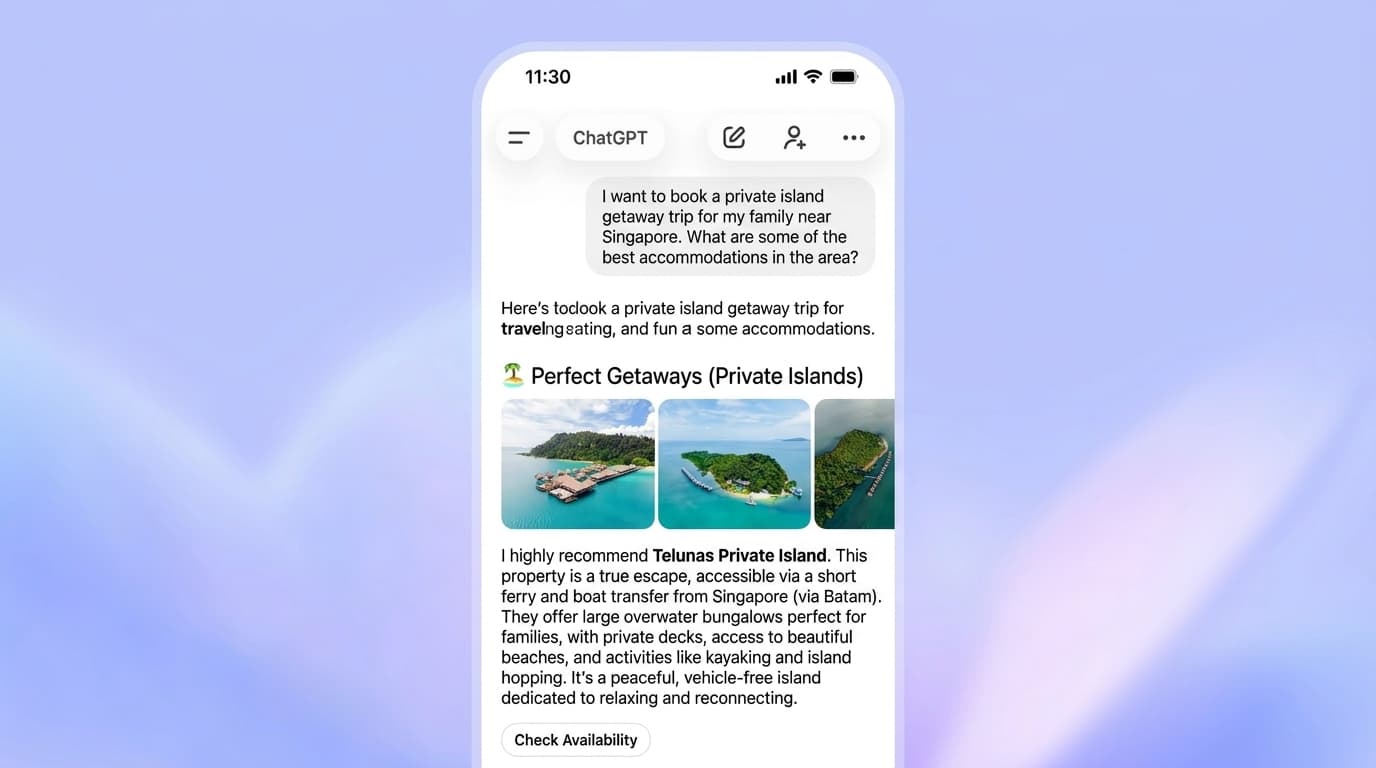
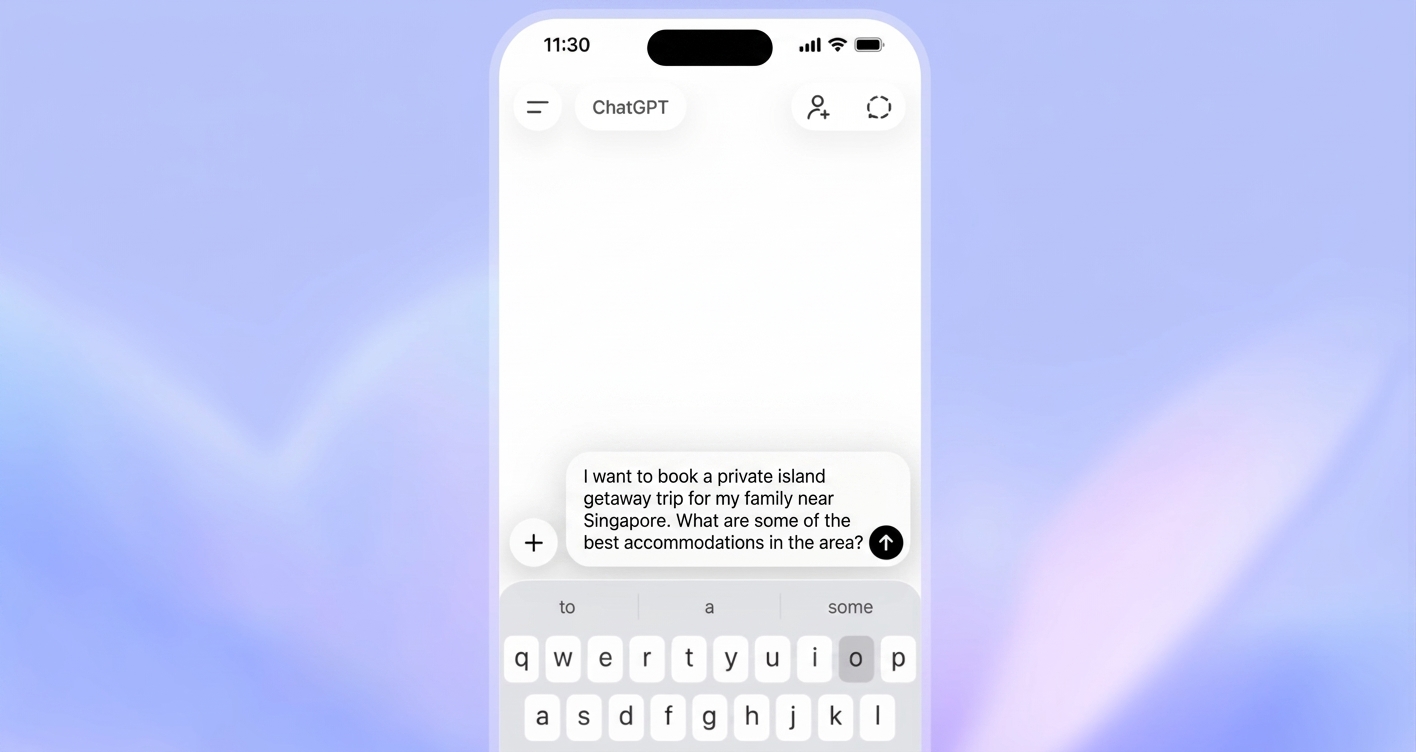
A traveler opens ChatGPT and types “best boutique hotel in Charleston with a rooftop bar.” Seconds later, they have a short list of recommendations. Below the answer sits a sponsored card from a hotel that paid to be part of that decision, and someone had to write the context hints, build the creative, and set up the tracking behind it.
For many properties, that someone is a ChatGPT ads agency. Zanobe runs these campaigns for hotel clients, with every campaign tracked to direct bookings. This guide covers how the channel works, what setup involves, which KPIs to watch, and how to choose the right partner for your property.
What Are ChatGPT Ads and How Do They Reach Travelers?
The standard placement is a sponsored card that appears below ChatGPT’s response. It includes your brand name, logo, a title, short copy, an image, and a landing page link (OpenAI Help Center, 2026). The card is labeled Sponsored and kept separate from the answer, and OpenAI states that ads do not influence what ChatGPT says (OpenAI Help Center, 2026).
OpenAI is adding formats quickly. A refreshed static card, more compact and with larger visuals, began rolling out on web and mobile in July 2026 (OpenAI, Jul 2026). Product feed campaigns turn a retail catalog into product cards and carousels. Sponsored Agents, announced on September 16, 2026, let users click into a labeled conversation with a brand’s own agent inside ChatGPT, and they are being tested only with selected U.S. advertisers (OpenAI, Sep 2026). For hotels, the standard sponsored card is the format you can buy and run today.
Ads may appear for users on the Free and Go plans. Plus, Pro, Business, Enterprise, and Edu accounts do not see ads (OpenAI Help Center, 2026). OpenAI now also shows ads in logged-out sessions, limited to ads suitable for all audiences, and Temporary Chats never show ads (OpenAI Help Center, 2026).
For hotel marketers, the conversation matters more than the demographics. Someone asking ChatGPT about hotels is in the middle of planning a trip, so their intent looks much more like a search query than a social media scroll.
Why Do GEO and AEO Matter as Much as the Ad Itself?
Generative Engine Optimization (GEO) is the work of structuring your website content, schema markup, and brand signals so AI models can surface your property in their answers. For hotels, that means room descriptions, amenity pages, and FAQs written so an AI engine can pull out the facts and cite them cleanly.
This matters for paid campaigns because the ad sits below the answer. Whether ChatGPT names your hotel inside the answer still depends on organic signals. A property with strong GEO can appear in both places in the same conversation.
Traditional hotel SEO is built around keywords and rankings. GEO adds a layer of structured data. Schema types such as Hotel (or LodgingBusiness), HotelRoom, FAQPage, and AggregateRating give AI systems machine-readable facts like price range, star rating, amenities, and policies (Schema.org). The clearer those facts are, the less likely an AI engine is to misdescribe your property or leave it out. Any ChatGPT ads agency worth hiring should audit this layer before it spends a dollar on ads.
Answer Engine Optimization (AEO) targets the specific questions travelers ask AI tools, such as “What’s the best hotel near the French Quarter for couples?” Pages that answer those questions directly are more likely to be cited, with or without a campaign running. Paid ads deliver visibility now, while AEO builds organic authority over time. Together, they give a property two ways to reach travelers who would otherwise book through an OTA.
How Do You Set Up a Hotel ChatGPT Ads Campaign?
How Should Hotels Write Context Hints?
Targeting on ChatGPT is mainly contextual. Advertisers write context hints that describe the conversations where their ad is relevant, and OpenAI uses those hints, along with the creative and landing page, to match ads to conversations. Hints guide matching, but they are not exact-match keywords (OpenAI Developers, 2026).
The strongest hotel hints describe a traveler’s situation. “Families visiting Orlando who want connecting rooms and a shuttle to theme parks” gives the system far more to work with than “family hotel,” because it mirrors how travelers describe their needs in a ChatGPT conversation. OpenAI’s own guidance favors specific context that explains what you offer (OpenAI Developers, 2026).
Build each ad group around one travel intent. Keep airport layovers, romantic weekends, and business travelers who need late check-in in separate groups. Each one needs its own creative, landing page, and hints, and mixing them in one ad group weakens relevance.
What Location and Audience Targeting Is Available?
Location targeting covers countries, states or regions, cities, markets, and postal codes where available (OpenAI Help Center, 2026). Use it to concentrate spend on the feeder markets that actually produce your guests.
Custom audiences let you upload your own customer lists, with one important limit for smaller properties. Including an audience, or raising bids for it, requires at least 25,000 matched users (OpenAI Help Center, 2026). Most independent hotels won’t reach that with a past-guest list. Exclusions can use smaller lists, so a practical first use is excluding guests who already have an upcoming direct reservation.
What Creative Assets Do You Need?
Each ad needs a title, copy, a square image, and a landing page URL, with your brand name and logo set at the account level (OpenAI Help Center, 2026).
Title: Up to 50 characters, with 16-24 recommended.
Copy: Up to 100 characters, with 32-48 recommended.
Image: Square PNG or JPG, no larger than 1200 x 1200 pixels.
Keep hotel headlines specific. “Private Pool Suites, Tulum” gives a traveler a concrete reason to click. “Book Your Stay Today” reads like every other ad they have already scrolled past.
How Should Hotels Bid and Track Conversions?
Start with CPC bidding. OpenAI recommends a starting maximum bid of $3-5 per click (OpenAI Help Center, 2026). CPM campaigns launched with a $60 default maximum bid, and reported clearing rates have since dropped to around $25-45 (Topify, Jul 2026).
Set up tracking before you launch. The OpenAI Measurement Pixel captures a click reference called oppref from your landing page URL and stores it in a first-party cookie, so a booking made later on your site can be tied back to the ad (OpenAI Help Center, 2026). The Conversions API sends booking events from your server, which holds up better when a session drops after payment. Running both with a shared event ID keeps the same booking from being counted twice.
Watch for one hotel-specific trap. Many booking engines run on a separate domain, and OpenAI advises preserving oppref through every redirect (OpenAI Help Center, 2026). If the click reference gets lost between your website and the booking engine, the reservation won’t be attributed. Your agency should own this setup from day one, because without it you have clicks and no proof they became direct bookings.
Which KPIs Should Hotels Track on ChatGPT Ads?
Start with realistic expectations. OpenAI states that ChatGPT Ads doesn’t yet have performance benchmarks across advertisers, industries, or campaign types (Search Engine Journal, Sep 2026). Across the platform, Similarweb measured a 0.50% click-through rate in August 2026 (PPC Land, Sep 2026).
Early independent results vary widely. One advertiser that spent about $60,000 over 15 days reported a 1.49x blended ROAS, with daily results swinging between roughly 0.2x and 2.9x (Opascope, Jun 2026). Others have reported weak results and click counts that didn’t match their own analytics (Trending Topics, Sep 2026). OpenAI’s own published example is an ecommerce advertiser that saw a 3x return on ad spend over 28 days (OpenAI, Aug 2026). That is one anonymous retail case, so it says little about how a hotel campaign will perform.
Give the first 30 days to learning and judge performance after that. A ChatGPT click doesn’t always lead to a same-session booking, especially at luxury properties where guests take longer to decide. Track micro-conversions as early signals: booking engine sessions, rate checks, and contact form submissions.
Know what attribution can and can’t capture. Click-through conversions use the window configured on your account, while view-through conversions use a fixed one-day window and are reported separately from the main Conversions total (OpenAI Developers, 2026). Adding UTM tags to your landing page URLs lets your own analytics catch guests who come back and book days later.
Set a ROAS floor before launch. If the campaign reaches it within 60 days, scale the budget. If it doesn’t, audit the creative and landing page before deciding the channel can’t work for your property.
How Do You Choose the Right ChatGPT Ads Agency for Your Hotel?
A ChatGPT ads agency running hotel campaigns should be able to answer four questions clearly:
Have you run campaigns for properties like ours (boutique, luxury, or independent)?
How do you write context hints for travel intent?
What does your attribution setup look like before day one, including on our booking engine?
What does success look like in the first 90 days?
Be careful with any agency that leads with impressions and “brand awareness” without discussing booking attribution. That is the wrong fit for a property focused on direct revenue.
Hotel campaigns also work differently from ecommerce. Room inventory is perishable, demand is seasonal, and a direct booking is worth enough that cost per booking matters from the first week. A good agency plans around shoulder seasons and occupancy gaps, and lines up ChatGPT with your Google Ads, SEO, and booking funnel so the channels support each other instead of competing.
Zanobe works only with hotels and travel brands, so our campaign templates, context hint frameworks, and attribution setups are built for hospitality. Our no-setup-fee pilot is designed to produce measurable direct booking data within 60 days, with no lock-in contract and one dashboard showing booking attribution, cost per direct booking, and ROAS.
Frequently Asked Questions
What does a ChatGPT ads agency do for a hotel?
It maps context hints to your guest segments, builds creative within OpenAI’s specs, sets up the Pixel and Conversions API through to your booking engine, and reports on cost per direct booking. A hotel-focused agency also coordinates ChatGPT spend with your Google, Meta, and GEO work.
How much do ChatGPT Ads cost for a hotel?
There’s no minimum commitment. The minimum budget is $25 per day per campaign in the U.S., and OpenAI recommends starting CPC bids at $3-5 per click (OpenAI Help Center, 2026). Size your test budget around the number of direct bookings you need to judge results with confidence.
Can a hotel pay to appear inside ChatGPT’s answer?
No. Ads appear below the answer, and OpenAI states they do not influence it (OpenAI Help Center, 2026). Being named in the answer depends on organic visibility, which is the job of GEO and AEO.
Is ChatGPT Advertising Worth It for Your Hotel?
ChatGPT Ads is a live channel today, with tens of thousands of advertisers already on the platform (OpenAI, Aug 2026). For hotels, the opportunity is reaching travelers while they’re still deciding, before they open an OTA. Paid ads, GEO, and AEO together give your property a presence both below and inside AI-generated answers.
The setup is manageable: write context hints around traveler situations, build specific creative, get tracking working before you spend, and set a ROAS target up front. Choosing a ChatGPT ads agency that understands hotel inventory, seasonal demand, and booking attribution is what turns that setup into direct revenue.
Zanobe’s no-setup-fee pilot lets you test the channel against your own numbers before committing a larger budget. Request a free 60-day pilot proposal, and we’ll show you how we would structure the campaign, context hints, creative, and attribution for your property.
[ Schedule a Call ]
Sources
OpenAI, Ads in ChatGPT (Help Center), 2026
OpenAI, Launch Campaigns (Help Center), 2026
OpenAI, Create Campaigns for ChatGPT Ads (Help Center), 2026
OpenAI, Set Up Custom Audiences for Your Campaign (Help Center), 2026
OpenAI, Conversion Measurement (Help Center), 2026
OpenAI Developers, Ads API: Campaign Targeting and Measurement Pixel, 2026
OpenAI, ChatGPT Ads Product Updates: Refreshed Static Ad Card, July 2026
OpenAI, Sponsored Agents Announcement, September 16, 2026
OpenAI, Expanding Access to AI With ChatGPT Ads, August 2026
Topify, ChatGPT Ads Cost in 2026: CPM, CPC & What You Actually Pay, July 2026
Search Engine Journal, 6 Months Into ChatGPT Ads, Advertisers Still Don’t Know What ’Good’ Looks Like, September 2026
PPC Land, OpenAI’s David Dugan Says ChatGPT Ads Passed a $1B Run Rate (Similarweb data), September 2026
Opascope, ChatGPT Ads Benchmarks: ROAS, CPC, and Cost From 15 Days of Real Spend, June 2026
Trending Topics, ChatGPT Ads Hits $1 Billion Run Rate, But Advertisers Are Not Sold, September 2026
Schema.org, Hotel, HotelRoom, FAQPage, and AggregateRating types